API SP vs API SQ Gasoline Engine Oil
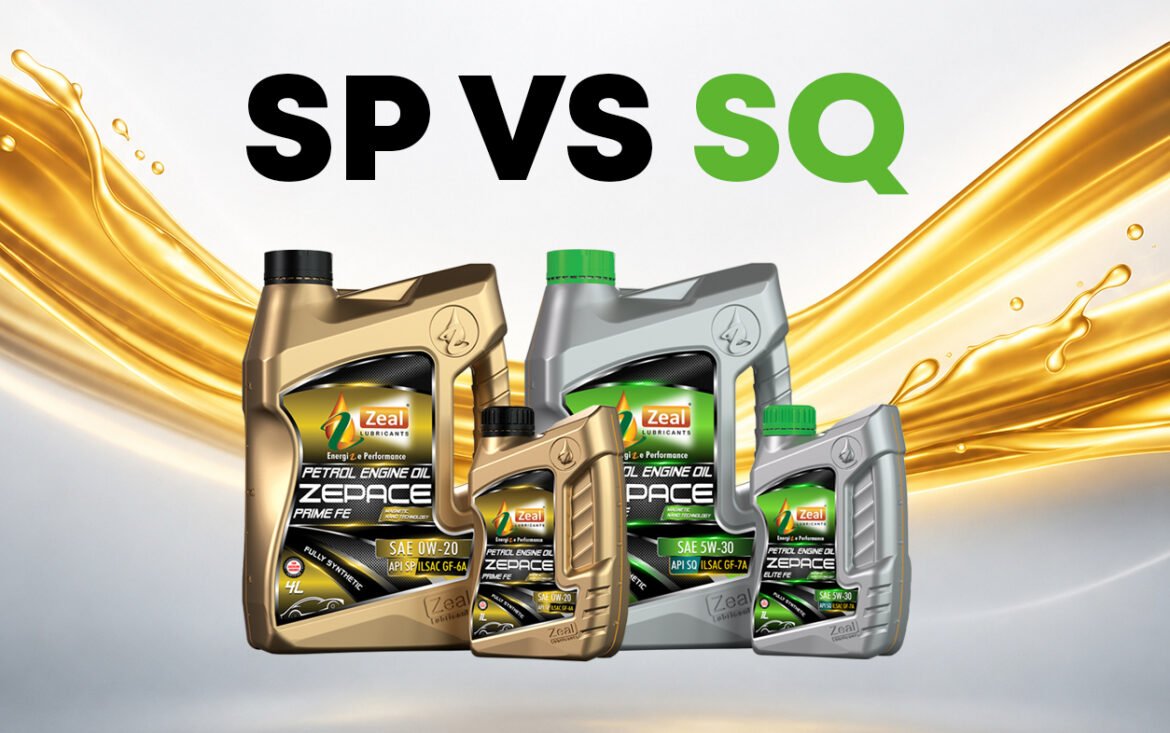
API SQ is the newer gasoline-engine-oil performance category and represents a significant upgrade over API SP, particularly for modern turbocharged gasoline direct-injection engines, hybrids, improved fuel economy, and protection against aged-oil LSPI. API SQ became licensable on March 31, 2025, while API SP was introduced in May 2020. (American Petroleum Institute)
Quick comparison
| Feature | API SP | API SQ |
| Introduced | May 2020 | March 2025 |
| Related ILSAC standard | GF-6A / GF-6B | GF-7A / GF-7B |
| LSPI protection | ✓ | ✓ Improved, including aged oil |
| Timing-chain wear | ✓ | Improved |
| Piston/turbo deposits | ✓ | Improved |
| Sludge & varnish | ✓ | ✓ |
| Fuel economy* | Improved | Further improved |
| Emission-system protection* | ✓ | Enhanced |
| Low-temperature pumpability* | Good | Enhanced |
| Ethanol fuel protection* | Up to E85 | Up to E85 |
| Modern turbo/GDI suitability | Excellent | Latest standard |
| Backward compatibility | SN and earlier | SP and earlier |
*These additional requirements specifically apply when discussing API SQ Resource Conserving / ILSAC GF-7A, rather than every API SQ formulation. (American Petroleum Institute)
1. The biggest change: aged-oil LSPI protection
LSPI = Low-Speed Pre-Ignition.
LSPI is abnormal combustion that can occur particularly in small-displacement, turbocharged, direct-injection gasoline engines operating at low speed and high load.
API SP was already specifically designed to provide LSPI protection. (American Petroleum Institute)
API SQ goes further. API describes the new GF-7 generation as protecting against LSPI with both fresh and aged oil. (American Petroleum Institute)
This matters because an engine oil doesn’t remain chemically identical throughout its drain interval. Oxidation, contamination, additive depletion and other changes occur as the oil ages.
SP: LSPI protection
SQ: stronger emphasis on maintaining LSPI protection as the oil ages.
2. Better timing-chain wear protection
Timing chains operate under demanding boundary-lubrication conditions. Oil quality, deposits, soot/contaminants and viscosity characteristics can influence chain wear.
API SP already introduced substantial timing-chain wear requirements.
The GF-7/API SQ generation raises performance further, with API explicitly describing GF-7A as providing improved timing-chain wear protection. (American Petroleum Institute)
This is increasingly relevant for modern downsized engines using sophisticated variable-valve-timing systems.
3. Better high-temperature deposit protection
Modern gasoline engines increasingly use:
- Turbochargers
- GDI
- Smaller displacement
- Higher specific power output
- Higher operating temperatures
These conditions increase the importance of controlling deposits.
API SP already provided improved high-temperature deposit protection for pistons and turbochargers compared with earlier categories. (American Petroleum Institute)
The API SQ/GF-7 generation strengthens this area further, particularly high-temperature deposit protection. (American Petroleum Institute)
4. Fuel economy improvement
This requires an important distinction.
API SQ by itself should not automatically be described as a fuel-economy specification.
API states that API SQ with Resource Conserving corresponds to ILSAC GF-7A performance by combining SQ protection with requirements including improved fuel economy. (American Petroleum Institute)
Therefore, for marketing or a Zeal technical article, write:
API SQ Resource Conserving / ILSAC GF-7A → improved fuel-economy performance
rather than simply:
Every API SQ oil → better fuel economy.
That distinction keeps the technical content accurate.
5. Better low-temperature performance
API’s current guidance specifically identifies enhanced low-temperature pumpability as one of the GF-7A performance improvements. (American Petroleum Institute)
At very low temperatures, the oil must reach critical engine components quickly enough during startup.
This is particularly relevant to modern low-viscosity grades such as: 0W-16, 0W-20, 5W-20 and 5W-30, depending on OEM requirements.
6. Better protection for modern emission systems
Modern gasoline engines rely on sophisticated catalytic converters, sensors and emission-control systems.
API says SQ Resource Conserving/GF-7A provides enhanced emission-control-system protection. (American Petroleum Institute)
This reflects an important trend: modern engine oils are no longer designed solely around friction and wear. Lubricant chemistry must work together with the engine’s emissions technology.
7. API SQ is backward compatible with API SP
This is commercially important.
API 1509 specifically states that oils meeting API SQ may be used where API SP and earlier S-category oils are recommended. (American Petroleum Institute)
So, generally:
API SQ → SP → SN → SM → SL…
However, the SAE viscosity grade and vehicle manufacturer’s requirements must still be followed. A higher API category does not mean you should substitute an incorrect viscosity grade.
For example, if an OEM specifies: SAE 0W-20, API SP then an appropriately formulated/certified: SAE 0W-20, API SQ can generally satisfy the API performance requirement.
It does not mean that an SAE 10W-40 API SQ should automatically replace the specified 0W-20.
API SQ and ILSAC GF-7
This relationship is useful to understand: API SQ = API gasoline performance category
while
ILSAC GF-7A/GF-7B = passenger-car gasoline oil standards containing additional requirements, including fuel economy.
API states that API SQ with Resource Conserving matches ILSAC GF-7A. (American Petroleum Institute)
GF-7 is divided into:
GF-7A — applies across applicable traditional viscosity grades and is backward compatible with previous GF-A categories.
GF-7B — specifically applies to SAE 0W-16 oils and uses API’s Shield certification mark. (American Petroleum Institute)
Simple explanation
Think of it this way:
API SP = 2020-generation gasoline engine protection
API SQ = 2025-generation gasoline engine protection
API SP was developed particularly around the challenges of turbocharged/GDI engines, including LSPI, timing-chain wear and turbo/piston deposits. (American Petroleum Institute)
API SQ builds on that foundation for newer engine technology, adding stronger protection requirements—especially aged-oil LSPI, timing-chain wear and high-temperature deposits, alongside GF-7 improvements in fuel economy, emissions-system protection and low-temperature performance. (American Petroleum Institute)
Best technical summary for Zeal
API SQ is the latest API gasoline engine oil category, introduced in 2025 as the successor to API SP. It provides enhanced protection for modern gasoline engines, particularly turbocharged and gasoline direct-injection designs, with improved protection against fresh- and aged-oil LSPI, timing-chain wear and high-temperature deposits. When combined with Resource Conserving requirements corresponding to ILSAC GF-7A, it also delivers improved fuel economy, enhanced emission-system protection and improved low-temperature pumpability. API SQ is backward compatible with API SP and earlier API gasoline service categories, subject to the vehicle manufacturer’s viscosity and lubricant recommendations. (American Petroleum Institute)
FAQ:
1. What is API SQ engine oil?
API SQ is the latest API service category for gasoline engine oils, introduced in March 2025. It is designed for modern gasoline engines, including turbocharged vehicles, and provides improved protection against low-speed pre-ignition (LSPI), timing-chain wear, high-temperature deposits, sludge, and varnish. API SQ oils can also be used where API SP and earlier gasoline-engine API categories are recommended, subject to the vehicle manufacturer’s viscosity and oil requirements.
2. Which is better, API SP or API SQ?
API SQ is the newer and more advanced engine oil standard compared with API SP. It provides improved protection against LSPI, timing-chain wear, high-temperature deposits, sludge and varnish. API SQ is backward compatible with API SP, making it suitable for vehicles requiring API SP, provided the correct SAE viscosity and manufacturer requirements are followed.
3. What are the benefits of API SQ engine oil?
API SQ provides enhanced engine protection, improved LSPI control, better timing-chain wear protection, superior piston cleanliness, improved sludge and deposit control, and greater oxidation resistance. It is designed to meet the performance demands of modern gasoline engines, including turbocharged and direct-injection engines.
4. What grades are available in API SQ engine oil?
API SQ engine oils are available in different SAE viscosity grades, commonly including 0W-16, 0W-20, 5W-20 and 5W-30. The correct viscosity should always be selected according to the vehicle manufacturer’s recommendation. API SQ indicates the oil’s performance level, while SAE grades such as 0W-20 or 5W-30 indicate its viscosity.
5. Does Zeal Lubricants provide API SQ engine oils?
Yes. Zeal Lubricants offers advanced API SQ engine oils under the ZePace Elite range, available in multiple SAE viscosity grades including 0W-16, 0W-20, 0W-30, 5W-20, 5W-30, 10W-30 and 10W-40. These oils are formulated for modern gasoline engines to provide enhanced protection against LSPI, wear, sludge and high-temperature deposits while supporting engine cleanliness and performance.